Mutual Relationships and the Theory of 69
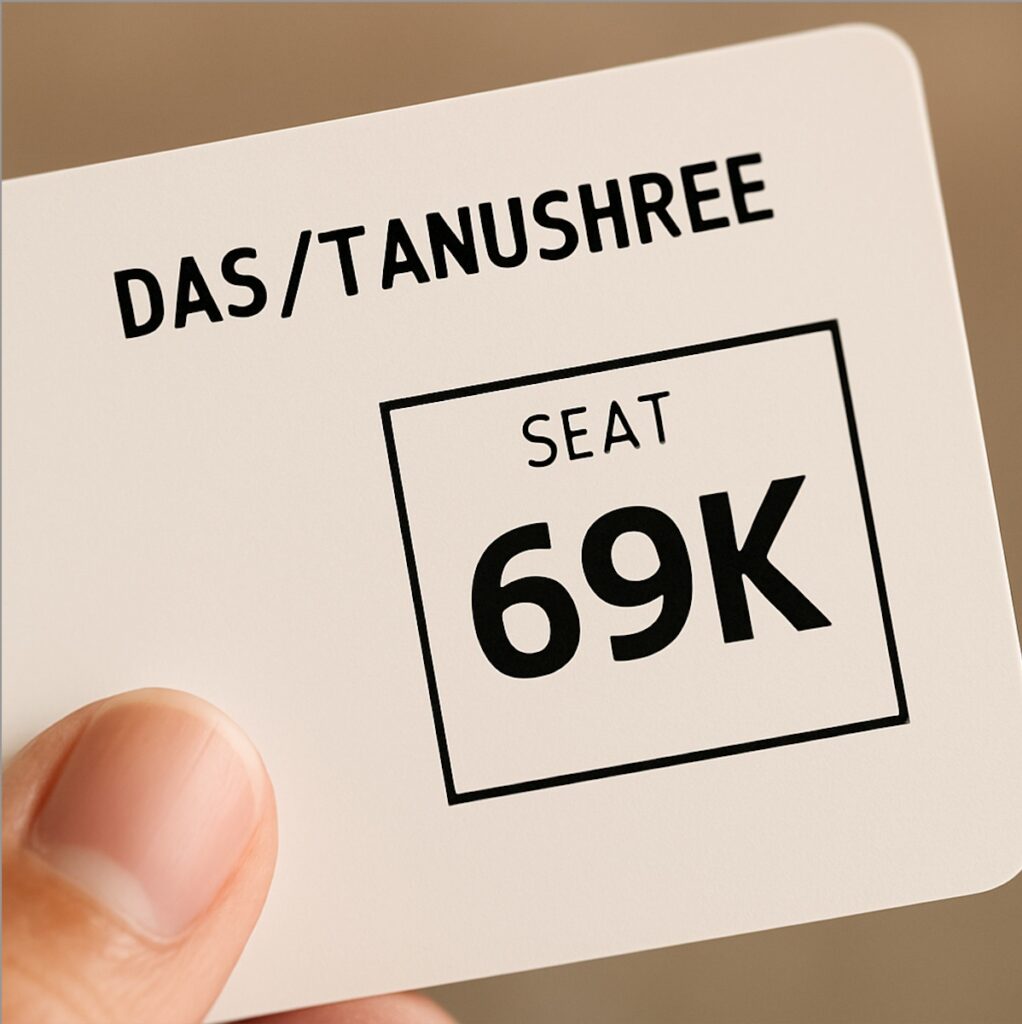
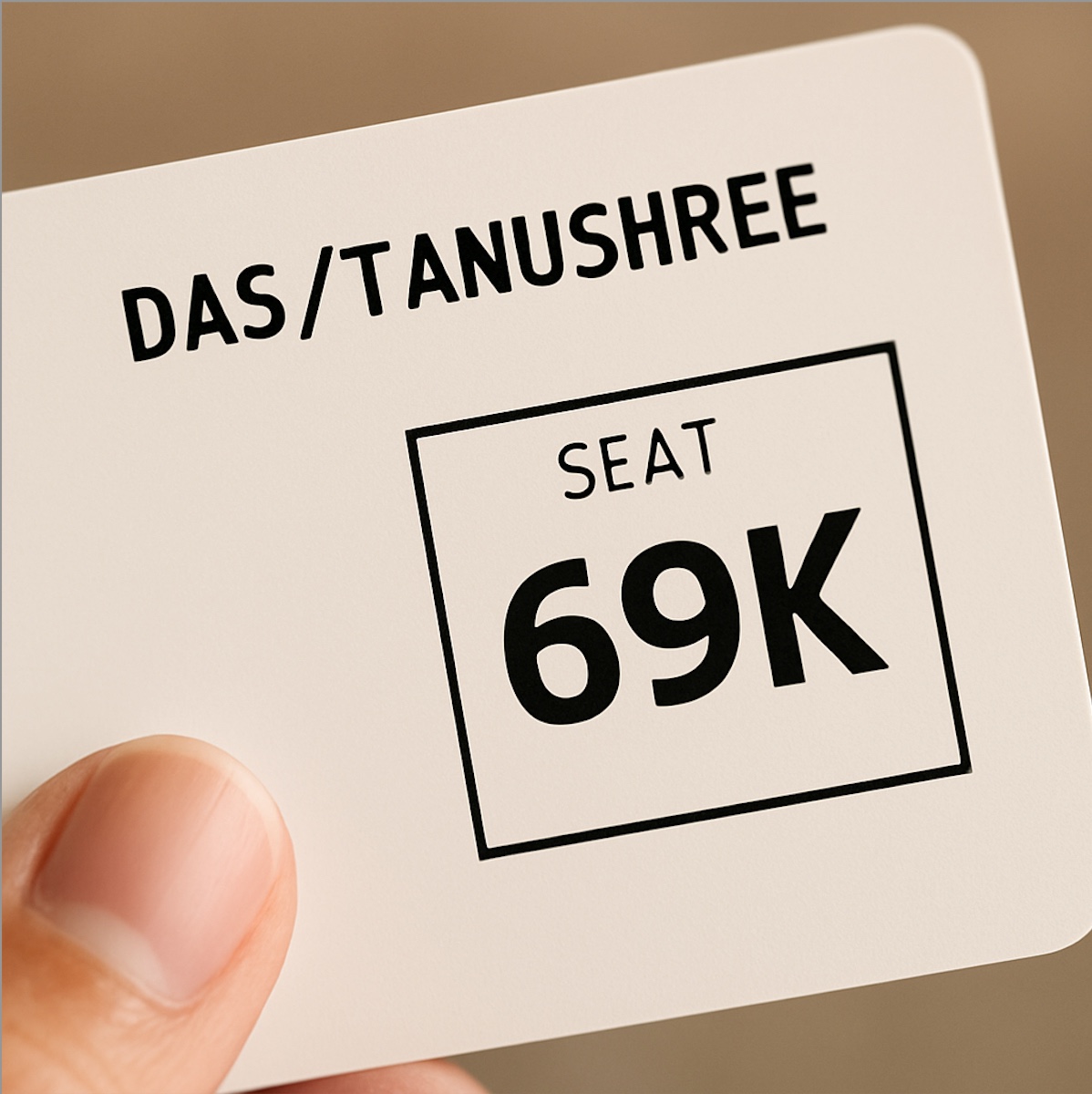
We often joke about numbers, but sometimes they hold more meaning than we realise. Recently, I boarded a flight to India and was assigned seat 69K. I laughed to myself — not just because of the number’s cheeky reputation, but because it felt like a sign. My car number plate contains 69, and this number follows me around like a cosmic inside joke. But today, I want to talk about mutual relationships — the kind that reflect the symmetry of 69 — and how this number became a metaphor for everything I now value in love, sex, and connection.
You see, I’m the only single in my group. Which means I’m often the designated subject of all jokes around sex and relationships. Every time we play bingo, the announcer never fails to call out, “Tanu’s favourite number — number 69!” And now even the kids, blissfully unaware of the innuendo, genuinely believe it is my favourite number.
And maybe they’re right.
Let’s talk about the number 69 — not just as a sexual position (though we’ll get to that), but as a symbol. In the Kamasutra, 69 is seen as a mutual act of pleasure — where both partners give and receive. It’s not about dominance, performance, or pleasing someone else at your expense. It’s about equality, connection, and reciprocity.
That’s the crux of mutual relationships, isn’t it? Whether in sex, love, or even friendship — the healthiest bonds are two-way streets.
Too often, we settle for one-way dynamics — relationships where only one partner feels empowered to make decisions or be heard, while the other slowly fades. As this Psychology Today article notes, it’s not about having equal power, but about both partners feeling they have a say — that’s what truly builds satisfaction. We give endlessly, hoping for scraps. We explain ourselves, justify our needs, or wait to be chosen. But that’s not connection — that’s depletion.
That imbalance is something I know intimately. In my own marriage, I see now how often I shouldered the load — I was the one negotiating with the cook about her salary hike, paying all the bills (even ones in his name), and still being expected to uphold traditions, host relatives, and keep the peace across both families. I paid for dinners when we went out. I made all the efforts. And still, I wasn’t trusted with a house key for months — I had to get off at his office so we could go home together. At the time, I thought it was romantic. But now? I see it for what it was: a quiet withholding. A lack of trust. A lack of equality.
Pleasure wasn’t mutual either. And if I initiated sex? I was labelled “characterless.” Mutual respect eroded — or maybe, it was never truly there.
That’s why the theory of 69 means more to me than the jokes. It represents a philosophy — one where mutual relationships thrive on reciprocity, balance, and trust. Not one person always giving while the other takes. Not one carrying the emotional or domestic weight alone.
Interestingly, the number 69 also resembles the yin-yang symbol — one curved side leaning into the other, equal but opposite, interdependent yet whole. When that balance is broken, when reciprocity is missing, the harmony of the whole is disrupted.
So yes — maybe 69 is my favourite number. Not because of its notoriety, but because of what it stands for: mutual respect, mutual trust, mutual effort, and mutual pleasure.
And if I ever do find myself explaining it to the kids someday… I’ll just say it’s about fairness.
Funny thing is — I’ve always loved metaphors. Even this theory of 69 is one. Cheeky on the surface, yes — but underneath, it’s really about balance and mutual relationships in everything we choose to build with someone.
So now I’m curious…
What’s your favourite number — and why?
Do you have a number theory of your own?
And what does fairness mean to you — in love, in friendship, in life?