
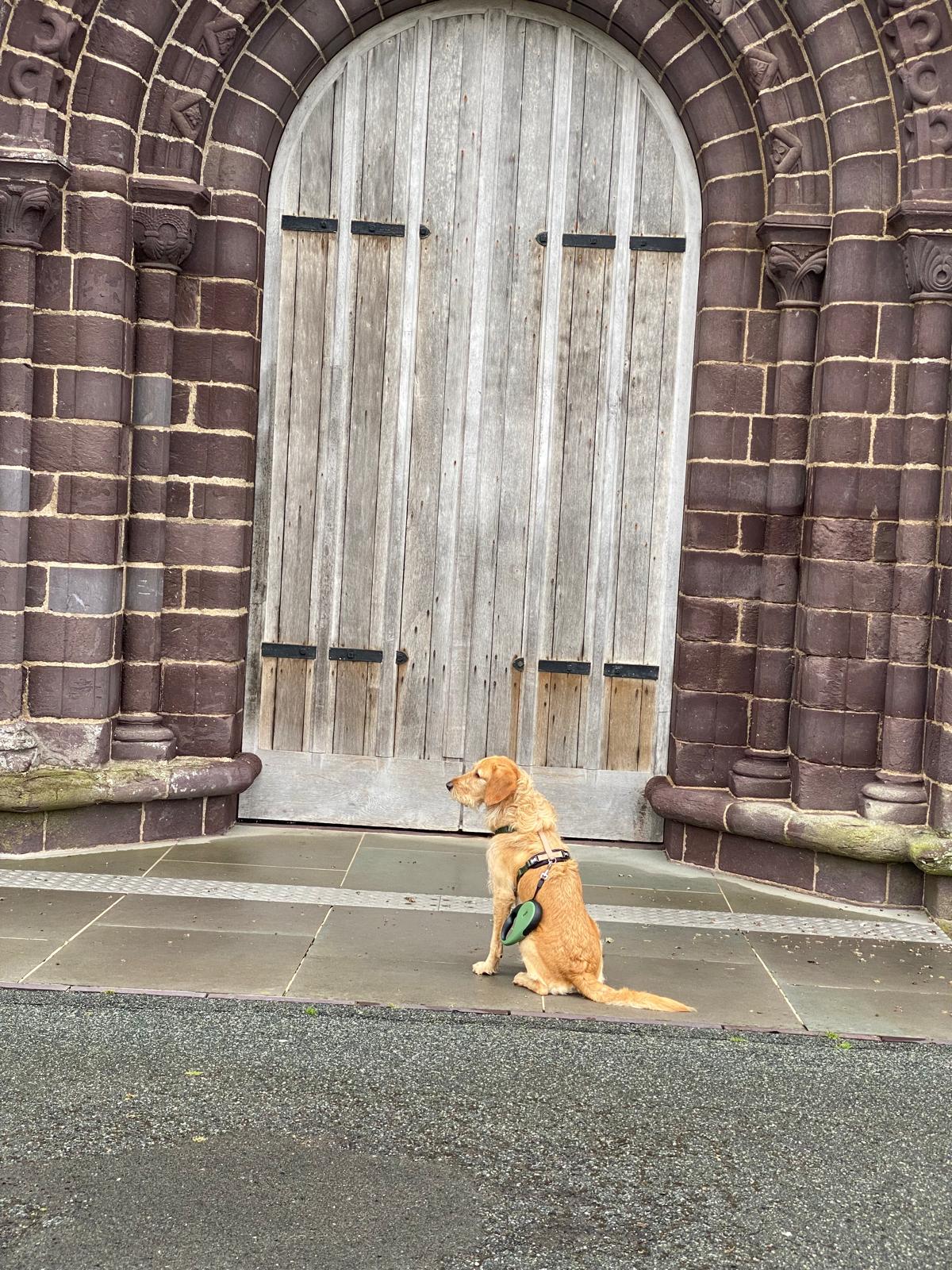
Short Story: The Door
It was 1953 when I saw them — and the house — for the first time.
A young Mishra couple was building their dream home. The house was little more than a skeleton then, with bare cement and concrete exposed throughout.
Mr. Mishra would visit the construction site daily, inspecting every corner to ensure their dream was taking shape. Sometimes, he brought his young son with him. Joy was three when I first met him — all innocence and energy.
I was yet to be painted and fitted — just the door, waiting patiently — so I lay inside the skeletal building with the other doors and windows. Everything inside was grey and rough. We, the doors and windows, were the smart-looking ones — smooth, polished, full of promise. The door in me felt a little superior to the rest, you know, the way your chin lifts and your nose tilts up.
A few days later, they painted me red. It was Joy’s favourite colour. I was over the moon — I would be the only one painted red, destined for the main entrance of the house. I cannot describe my joy that day. I felt strong, important. I must confess — I snubbed the other doors a little. The windows looked at me in awe.
I was placed next to the most beautiful window in the house — a sash window with her own shutters. She looked different from the others, except for her twin upstairs. They were painted white. The rest of the doors and windows were painted plain brown.
It was a new phase for all of us. We no longer stood side by side in the storeroom — now each had their own place to guard with pride.
I could not see the entire house, of course. All I could glimpse was the hallway, the staircase, and a sliver of the front garden. But from the voices of passersby — “Oh! Look at this big, beautiful house!” — I gathered it must be lovely.
The fence soon bloomed with pink, white, and orange bougainvilleas. Birds came too. Oh, what a pretty sight it was.
Soon the servants arrived to prepare the house. I think the Mishras were an affluent family — or so I heard. The senior Mishras never moved in. Perhaps they had passed away; I only know the brothers parted ways.
Mr. Mishra was a young lawyer — tall, handsome, sharp-featured. He exhaled confidence. He turned one of the downstairs rooms into his office. All sorts of people came through me — short, tall, fat, poor, rich, old, young. I never liked any of them. I could never understand why one would defend a criminal — but more than once, I heard Mr. Mishra tell his wife: “The law treats everyone equally until proven guilty. Everyone deserves a defence.”
I could only roll my eyes.
Mrs. Mishra spent her days running after little Joy or instructing the servants. She was fair-skinned with beautiful long hair. Each morning, she rose early, bathed, and performed her prayers. She was devout; Mr. Mishra was more modern, less inclined to religion. He often hosted fellow lawyers for spirited debates at home. The young couple were poles apart.
She was good-natured, but over time I saw her storm out to her parents’ house now and then. I must admit — I liked those times. She always banged me shut when angry, and it was a relief to have her away for a while. I suspect Mr. Mishra enjoyed those interludes too — he would invite friends for poker and drinks.
In early 1964, I — the door — felt violated for the first time. The house was broken into. They stole Mrs. Mishra’s jewellery and a large sum of cash. I was hurt — not because my lock was broken, but because a dry wooden door cannot cry when it fails the one duty it was meant to do. They changed my lock immediately.
Now a teenager, Joy brought his friends home often. I loved the clatter they created. The house felt full. From upstairs, I would hear them discuss dreams. Joy wanted to be a lawyer like his father — after all, Mr. Mishra was his hero.
I saw the Mishra family prosper. They bought their first car — a dark green Fiat Premier Padmini. I recognized the same pride in that car as I’d once felt in my red paint.
Every few years, they repainted the house — and me. With time, I went from red to dark brown to grey, and finally, to white.
The year 1968 was a sad one for me. Joy left for university. I missed his footsteps. Only during his short visits would the house come alive again with laughter and chatter — though now their conversations had grown more serious: “Jobs… prospects… the future…”
1975 was a turbulent year. Mr. Mishra defended political clients during the civil unrest. People came and went constantly. They rarely bothered to close me.
News arrived that Joy had been arrested during a student demonstration. Mr. Mishra rushed to free him. Tension hung in the house. Mrs. Mishra prayed more fervently, hoping her son would stay out of trouble — but like father, like son. Joy had strong opinions. Now he joined his father in debates. I could sense Mr. Mishra’s pride when his son bested him.
A few years later, Joy brought home a beautiful girl. I had never seen such a pretty face enter the house. Fair, with big brown eyes, long hair, and an air of quiet confidence. Oh, she smelled lovely — expensive perfume, no doubt.
But the Mishras were not pleased. Zubeida — Joy’s girlfriend — was a Muslim journalist. Joy wished to marry her. That night, the house did not sleep. I heard heavy sighs, hushed arguments.
A Brahmin marrying a Muslim — unheard of! Unimaginable!
Mrs. Mishra was distraught; Mr. Mishra more progressive. In the end, he gave his blessing. Joy and Zubeida married and moved in.
A year later, Joy Jr. arrived — Samir. A breath of fresh air! Slowly, the ice between Mrs. Mishra and Zubeida melted. The house was full again.
By 1983, Joy had bought a new car — a bright red Maruti 800. His career as a lawyer flourished, though I sensed he wasn’t fully content. One day, I overheard him and his father discussing a move to Delhi.
Six months later, Joy and Zubeida left. I had never felt prouder — Joy to practise before the Supreme Court of India, Zubeida to work at The Times of India.
If only I could shed tears of joy! My wooden heart swelled.
Joy and Zubeida visited during holidays now, with little Myra joining Samir. The family looked perfect. In their family photo, I stood behind them — you can still see me in the picture that hangs in the living room.
The furniture changed over the years, but we — the fixtures — stood our ground.
Then came the night of January 26th, 1990. I heard the ambulance siren. Mr. Mishra had suffered a stroke.
They brought him back days later — the air in the house heavy with sorrow. I heard Mrs. Mishra’s wails. Then, one morning, four men carried Mr. Mishra out. Joy walked ahead, carrying a smoking earthen pot.
The patriarch was gone. For days, people came and went. No one closed me, the door.
I wondered — when I was once a tree, did anyone mourn me when I was felled and made into a door? I wondered if Mr. Mishra, too, might become something new in time.
But time moves on. The Mishras sold the house and moved to Delhi for good.
Soon, the Pandeys arrived — a young couple with a three-year-old. They painted me red again — Preeti’s favourite colour.
Such similarities.
So much had changed. And yet I, the door, stand where I always was.
P.S. If you’re in the mood for more thought-provoking fiction, check out this brilliant short story from The New Yorker. It lingers long after you finish reading.